Home Blog Fire protection systems
Fire protection systemsDiesel vs Electric Fire Pumps: How to Choose Under NFPA 20
Compare diesel and electric fire pumps under NFPA 20, including power reliability, maintenance, pump-room requirements and practical selection criteria.
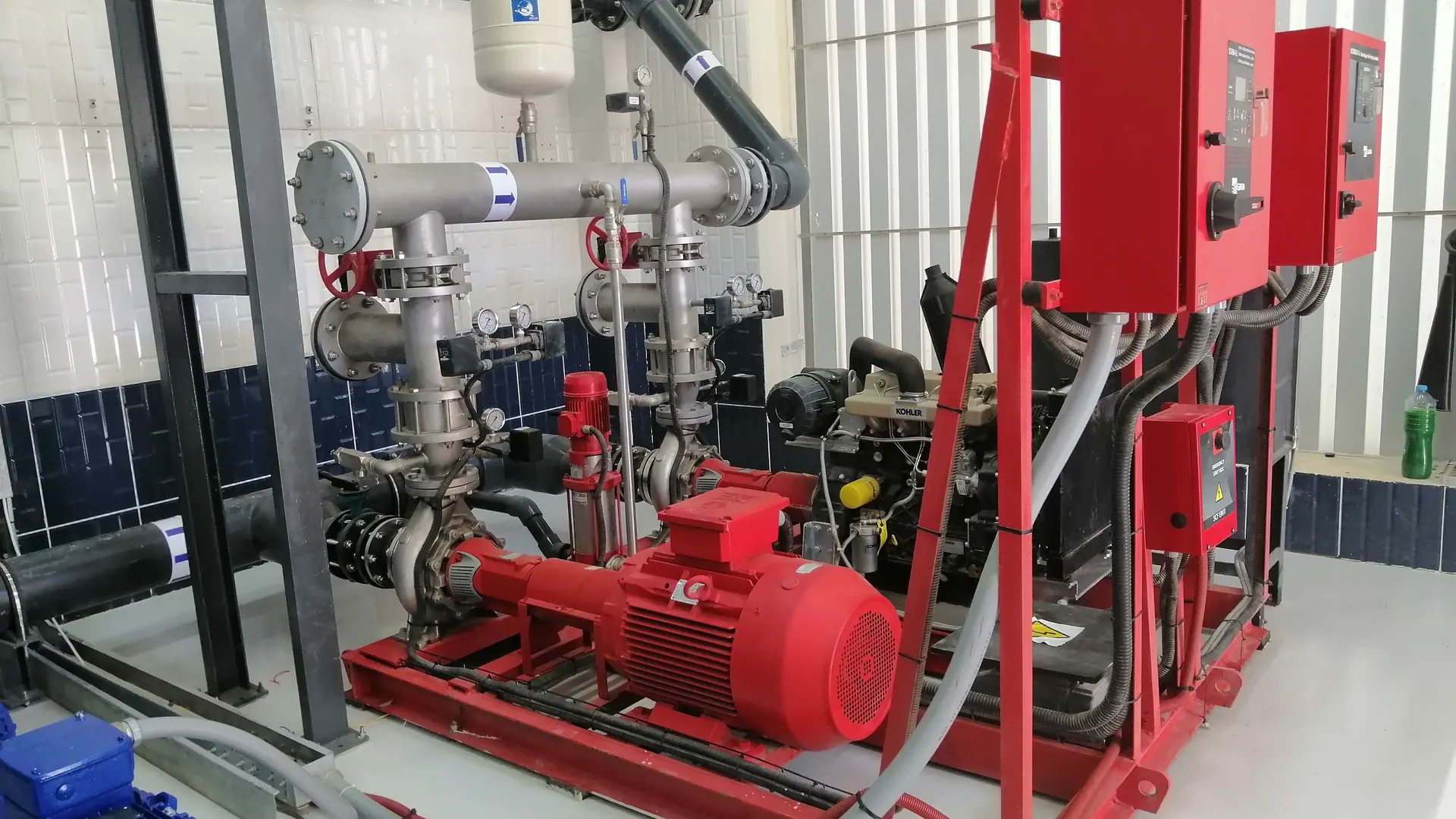
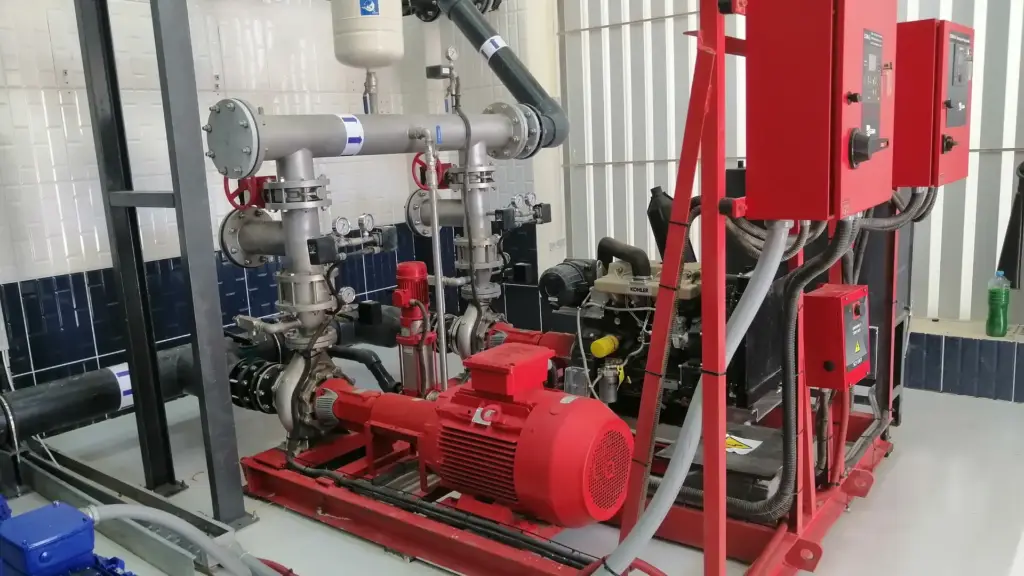
Choosing between a diesel-driven and an electric-motor fire pump is not simply a question of which driver is cheaper. The correct choice depends on power reliability, facility risk, required pump duty, emergency power strategy, maintenance capability, NFPA 20 and the AHJ.
What does NFPA 20 control?
NFPA 20 covers stationary fire pumps, including their drivers and controllers. A compliant selection therefore involves the complete package: pump, driver, controller, power or fuel arrangement, accessories, installation conditions and testing.
Electric fire pump
An electric fire pump uses an electric motor and dedicated fire pump controller. It is mechanically simpler than a diesel engine and eliminates the diesel fuel system, engine cooling arrangement, starting batteries and exhaust. Its suitability, however, depends heavily on the reliability and configuration of the electrical supply.
Diesel fire pump
A diesel fire pump uses a dedicated diesel engine and controller. Current NFPA 20-based diesel controllers provide automatic/manual operation, battery charging and monitoring, pressure/event recording and engine alarms. Diesel packages therefore need more supporting equipment and engine-related maintenance.
Diesel vs electric: practical comparison
| Design point | Electric | Diesel |
|---|---|---|
| Primary energy | Electrical supply | On-site diesel fuel |
| Mechanical complexity | Lower | Higher: engine, fuel, batteries, cooling, exhaust |
| Routine maintenance | Generally simpler | More engine-related work |
| Pump room | Controller and suitable power routing | Fuel, ventilation, exhaust, batteries and cooling |
| Dependence on site electrical supply | High | Low for motive power |
The key question: how reliable is the electrical supply?
A designer should not assume an electric driver is acceptable merely because normal utility power exists. The source, routing, disconnecting means, protection and any alternate-source arrangement must be evaluated against the applicable NFPA 20 requirements and project/AHJ criteria.
Where loss of normal power during a fire is a credible concern, the design may require an acceptable alternate arrangement or may favor diesel. The decision should come from the actual power architecture and risk, not a generic rule.
When is electric attractive?
- A reliable, compliant electrical supply is available.
- The site’s infrastructure supports the required motor power.
- Simpler routine maintenance is a priority.
- Fuel, exhaust and diesel ventilation would add unnecessary complexity.
When is diesel attractive?
- Site electrical reliability is inadequate for the fire protection strategy.
- Independent on-site motive power is desirable.
- Providing electric capacity or an alternate source is difficult.
- The owner can correctly maintain fuel, batteries, cooling, ventilation and exhaust.
Do not compare only purchase price
An electric package may require substantial electrical infrastructure, while diesel requires fuel storage/supply, batteries and chargers, cooling, ventilation, exhaust and added maintenance. The cheapest skid can therefore produce the more expensive complete installation.
Can a project use both?
Yes. Some facilities use multiple fire pumps with different drivers as part of a reliability strategy. Capacities, sequencing and power arrangements must still be engineered for actual system demand and governing requirements.
SESCO Engineering Note
Start pump selection with the hydraulic duty—required flow and pressure—then evaluate the driver. For driver selection, start with the site’s real power reliability and emergency strategy. Choosing “diesel because it is safer” or “electric because it is simpler” without studying the site can create unnecessary cost or weak reliability.
Information to confirm before ordering
- Rated flow and pressure.
- Pump type and required listing/approval.
- Voltage, frequency and power-source arrangement.
- For diesel: engine rating, fuel, cooling, batteries, ventilation and exhaust.
- Controller type and required approvals.
- Pump-room environment and space.
- Project specifications, insurer requirements and AHJ comments.
Conclusion
There is no universal winner. Electric drive can offer a simpler installation when suitable reliable power is available. Diesel can provide valuable independence from the site electrical system, but adds fuel, engine and maintenance requirements. Final selection should combine hydraulic demand, NFPA 20, project specifications, power reliability, maintainability and AHJ acceptance.
This practical guide does not replace the applicable edition of NFPA 20, project specifications or AHJ requirements.