Home Blog Fire protection systems
Fire protection systemsUL Listed vs FM Approved: What’s the Difference for Fire Protection?
Understand UL Listed vs FM Approved fire protection equipment, how to verify product certification and what consultants should check before approval.
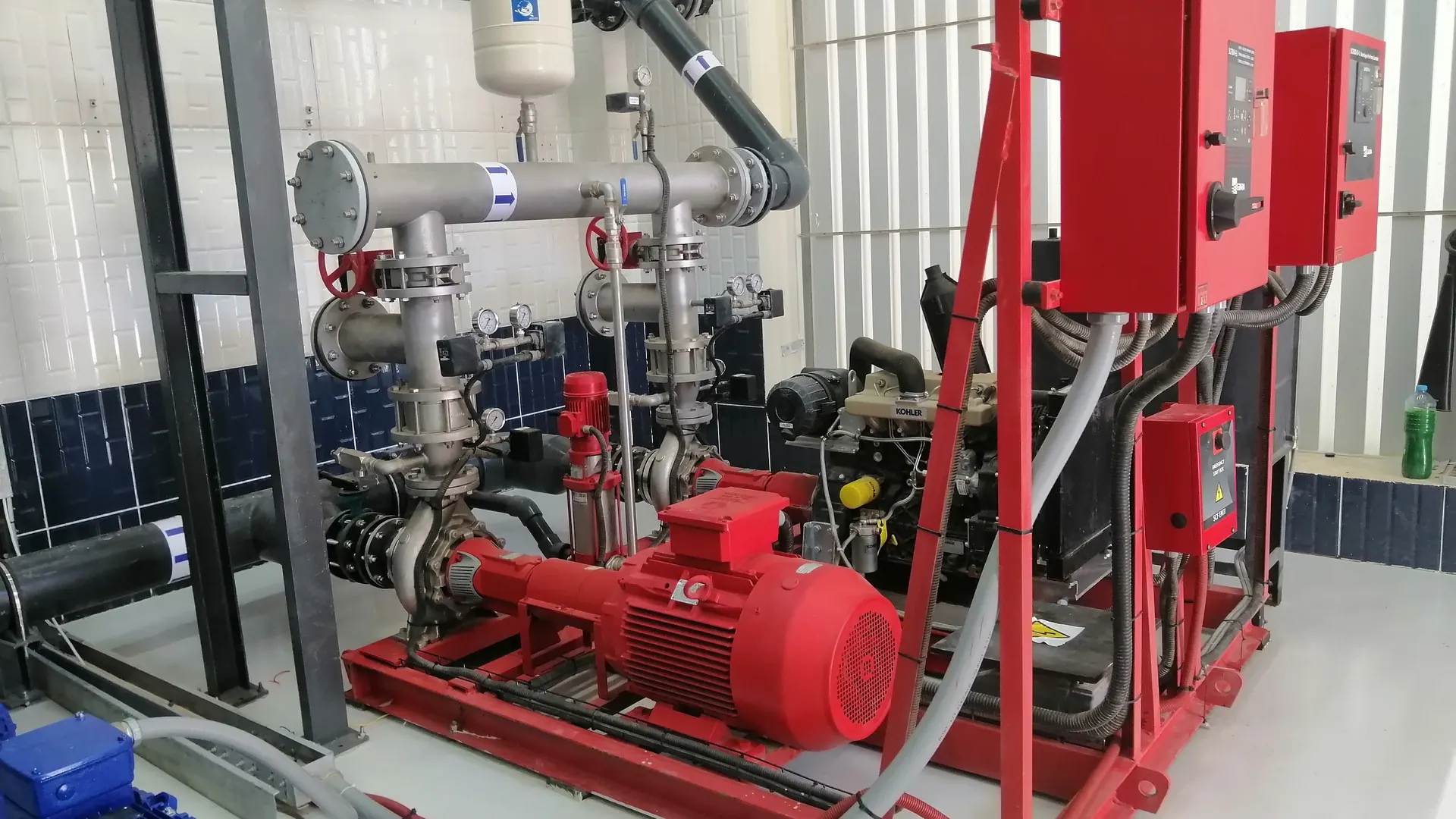
In fire protection procurement, UL Listed and FM Approved are often written together in specifications. They are not the same certification, however, and neither mark is a universal substitute for checking the exact product, its intended application and the project’s approval requirements.
This practical guide explains what each designation means, how to verify a certificate or listing, and what contractors and consultants should check before accepting fire pumps, valves, sprinklers and fire alarm equipment.
What does UL Listed mean?
UL Listed identifies a product certified under the applicable UL Solutions certification program. Representative samples are evaluated against relevant requirements, and ongoing follow-up services help confirm continued production compliance. The certification applies to the specific product category, models, ratings and conditions shown in the certification record—not to everything manufactured by the brand.
UL also uses other marks, including UL Classified and UL Recognized Component. These are not automatically interchangeable with UL Listed. The wording and scope on the actual mark and certification record matter.
What does FM Approved mean?
FM Approved means the product or system has successfully completed an applicable FM Approvals evaluation and certification program focused on property loss prevention. FM evaluates fire protection equipment and many other categories. An approval may cover an entire product or system, or a defined performance characteristic, so the scope must be read carefully.
FM Approved products are identified through the FM Approvals Approval Guide. Approval does not mean that every variation, size, configuration or application of a manufacturer’s product is approved.
UL Listed vs FM Approved: comparison
| Question | UL Listed | FM Approved |
|---|---|---|
| Who certifies it? | UL Solutions certification program | FM Approvals |
| Core focus | Compliance with applicable product safety/performance requirements | Property loss prevention and applicable approval requirements |
| How to verify? | UL Product iQ | FM Approval Guide |
| Does it cover all products from the manufacturer? | No—only products within the listed scope | No—only products within the approved scope |
| Can a product carry both? | Yes, where the particular product has obtained both certifications. | |
| Does one automatically replace the other? | No. Acceptance depends on the project specification, applicable code, authority having jurisdiction (AHJ) and insurer requirements. | |
Is UL/FM the same as NFPA compliance?
No. NFPA standards establish requirements for the design, installation, testing or maintenance of fire protection systems, depending on the standard. Product certification provides evidence that a particular product was evaluated within a stated certification scope. A compliant system must satisfy the applicable installation/design rules as well as any product listing or approval requirements.
Also, the word listed in a code may refer to evaluation by an acceptable independent certification body; it does not always mean that the code specifically requires the commercial UL Listed mark. Read the exact project clause before assuming otherwise.
When does a project need both UL and FM?
Some project specifications or insurance requirements explicitly demand UL Listed and FM Approved equipment. Other projects accept UL-only, FM-only or another appropriate third-party certification for certain products. There is no sound basis for claiming that every fire protection component in every project must have both marks.
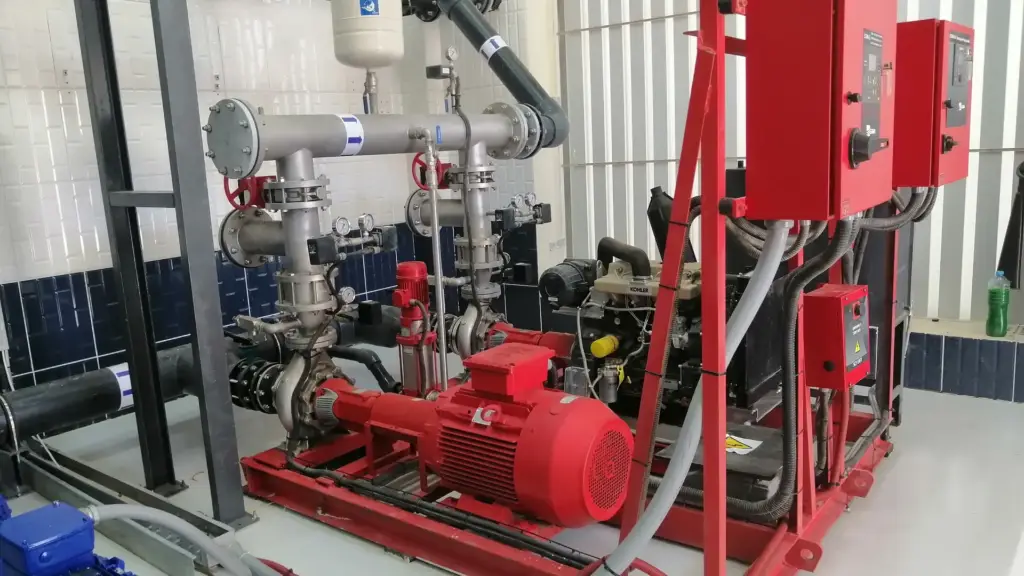
For a fire pump package, for example, check the required certification status of the pump, driver, controller and other relevant components separately. Do not assume that a UL/FM mark on one component certifies the entire assembled package.
How to verify UL and FM certification before purchase
- Request the exact manufacturer and model number. Include size, pressure/rating, voltage or configuration as applicable.
- Ask for the certification file number or approval identification. A brochure logo or an undated PDF is not sufficient evidence.
- Search UL Product iQ for the product category, manufacturer, model and file number, and review the applicable certification guide information.
- Search the FM Approval Guide for the exact model and approval scope.
- Check the limitations. Confirm intended use, operating conditions, ratings, sizes and accessories covered.
- Inspect the actual product marking and compare it with the order, submittal and directory entry.
- Confirm project acceptance with the consultant, AHJ and insurer where applicable before procurement.
Practical procurement example: a fire protection valve
A supplier offers a valve described as “UL/FM.” Before approval, the contractor should verify whether the specific valve model and size appear in the relevant directories and whether its pressure rating, installation orientation and intended fire protection service are within scope. A manufacturer’s general UL/FM marketing statement cannot establish those facts.
Similarly, a fire alarm panel with one certification does not automatically make every detector, module or peripheral compatible or certified for that panel. Confirm the manufacturer’s published compatibility and system documentation.
SESCO Engineering Note
Do not compare certificates by logo alone. In a technical submittal, the most useful evidence is a matching chain: approved manufacturer → exact model/variant → certification directory record → technical datasheet → project requirement. Missing any link can lead to rejected materials, replacement costs and schedule delays.
Common mistakes to avoid
- Assuming UL is always “higher” or “lower” than FM: they are different certification schemes, not a universal ranking.
- Assuming an ISO 9001 certificate proves that a product is UL Listed or FM Approved.
- Accepting an unverified logo on a catalogue as proof of current certification.
- Ignoring model suffixes, pressure classes, sizes or listed accessories.
- Assuming an NFPA-designed system automatically makes all installed products certified.
Official sources and verification tools
- UL Solutions — Product iQ certification database
- UL Solutions — Third-party certification and follow-up services
- FM — FM Approvals certification overview
- FM Approvals — Approval Guide
For related pump design considerations, see our fire pump sizing guide.
Need help reviewing a fire protection submittal? Contact the SESCO engineering team for project-specific equipment selection and certification checks.
Technical note: This article is an engineering overview, not a substitute for the governing edition of applicable standards, certification records, project specifications or AHJ decisions.