Home Blog Inspection and maintenance
Inspection and maintenanceHow often should a fire pump be tested?
A fire pump can sit idle for years and still has to start the first time. This is the testing routine NFPA 25 sets out, weekly, monthly and yearly, and what to record each time.
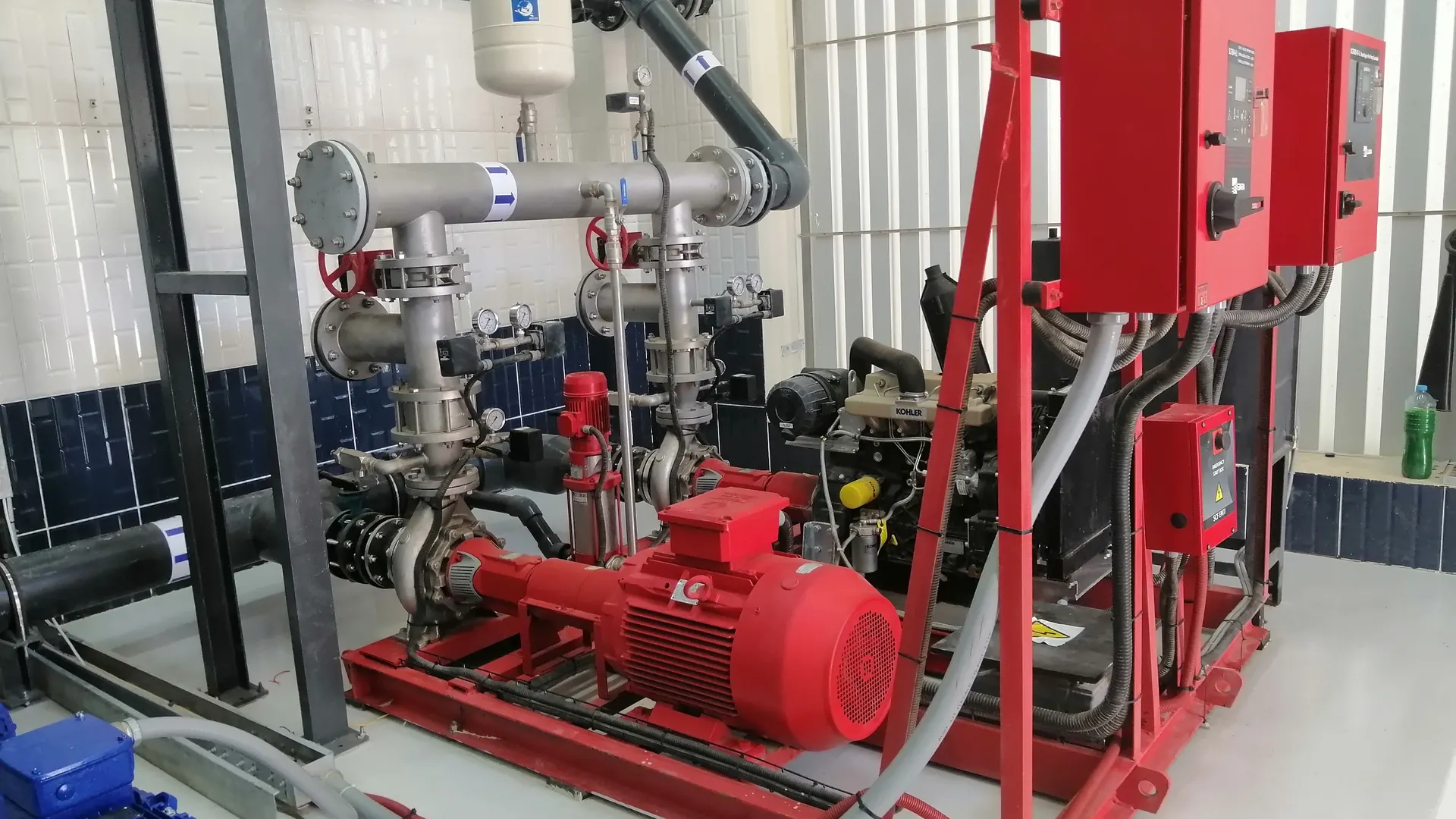
A fire pump may not run for real for years, but on the day a fire starts it has to start the first time and deliver its full rated flow and pressure. The only way to know it will is to run it regularly and record what it does. NFPA 25, the standard for the inspection, testing and maintenance of water-based fire protection systems, sets out the routine. This is how it works in practice.
Weekly or monthly: the no-flow test
In a no-flow test, also called a churn test, the pump is started and runs against the closed system, with no water flowing out. It proves that the controller starts the pump automatically and that the pump and its driver run smoothly.
- Diesel engine pumps are run every week, for at least 30 minutes, so the engine reaches its working temperature.
- Electric motor pumps are run for at least 10 minutes, weekly or monthly depending on the pump, the building and the edition of NFPA 25 your authority applies.
During the run, the person testing records:
- Suction and discharge pressure on the gauges.
- That the packing glands drip slightly, as they should, and that the pump casing is not overheating.
- Any unusual noise or vibration from the pump, motor or engine.
- For diesel pumps: oil pressure, engine temperature, cooling water flow and the time the engine takes to reach speed.
- For electric pumps: the time from start to full speed, and the voltage and current if the controller shows them.
What to check in the pump room
- The pump room is kept heated: above 4 °C, and warmer for diesel pumps where the engine manufacturer asks for it.
- Suction, discharge and bypass valves are fully open.
- The controller shows power available and no alarms.
- For diesel pumps, the fuel tank is at least two thirds full and both batteries are charged.
- The jockey pump holds the system pressure without starting too often. Frequent starts usually mean a leak somewhere in the network.
Once a year: the flow test
Once a year the pump is tested while it delivers water, to prove it still meets its rating. Pressure and flow are measured at three points:
| Test point | What it shows |
|---|---|
| No flow (churn) | The highest pressure the pump builds against a closed system. |
| Rated flow (100%) | That the pump still gives its rated pressure at its rated flow. |
| Peak flow (150%) | That at one and a half times its rated flow the pump still gives at least 65% of its rated pressure. |
The results are compared with the manufacturer’s curve and with the acceptance test done when the pump was installed. If the pump has lost more than 5% of its performance, the cause has to be found and fixed.
Keep the records
Every test should be written down: the date, who did it, the readings and any problem found. Records show a pump slowly losing performance long before it fails, and insurers and civil defence inspectors ask to see them.
How SESCO can help
Our regular maintenance visits include the weekly or monthly runs, the annual flow test and a written report after every visit. We also supply and assemble complete UL listed, FM approved fire pump stations.
This article is general guidance. The exact routine for your site depends on your equipment and on the requirements of your authority having jurisdiction.