Home Blog Fire protection systems
Fire protection systemsAddressable or conventional fire alarm: which one does your building need?
Both systems find a fire and sound the alarm. The difference is how precisely they tell you where it is, and that decides which one suits your building.
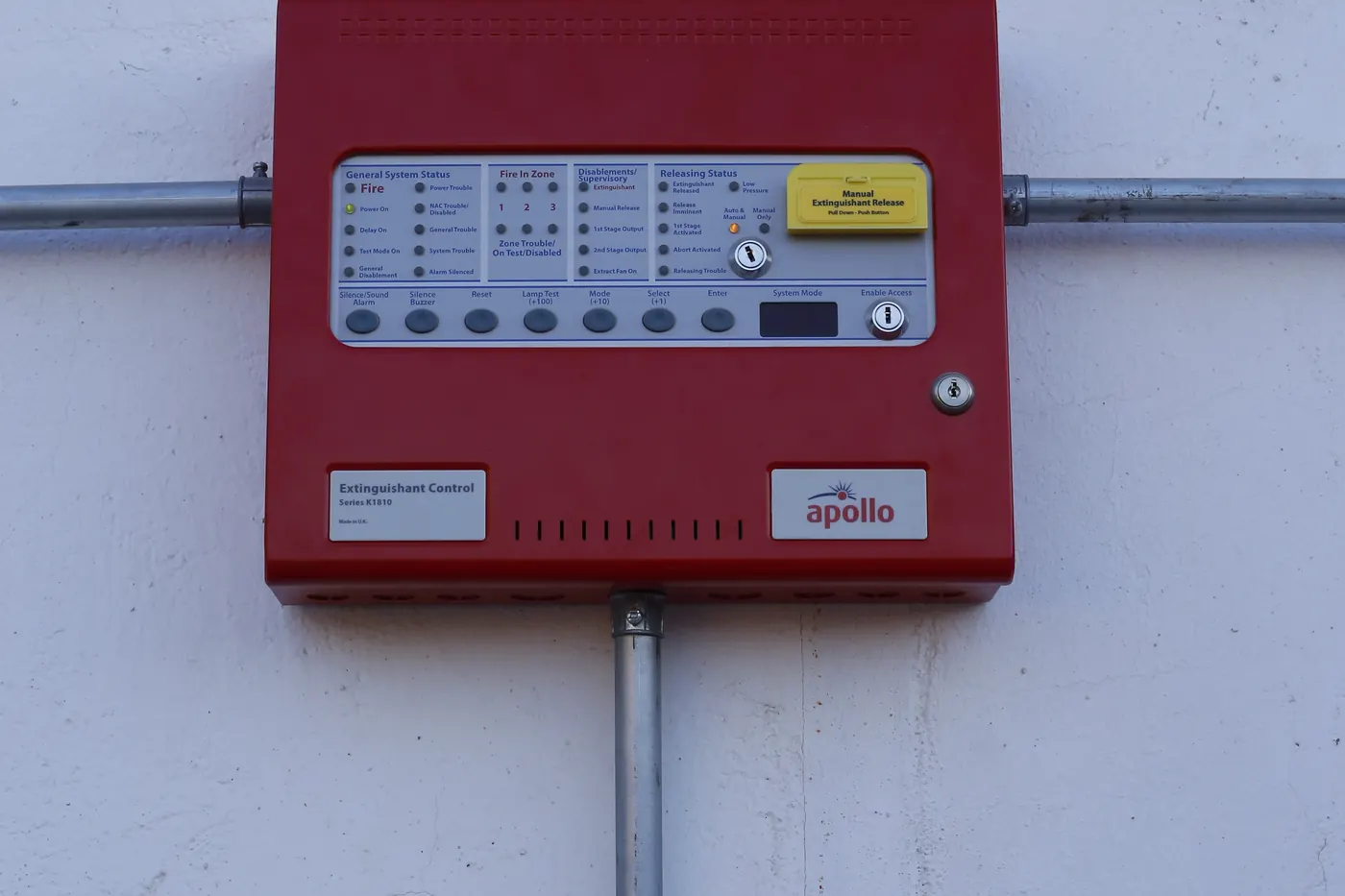
Every fire alarm system does the same basic job: detectors and call points sense a fire, the control panel decides, and sounders and beacons warn everyone to leave. What separates a conventional system from an addressable one is how much the panel knows about where the alarm came from.
Conventional systems: the panel knows the zone
In a conventional system the building is divided into zones, and all the detectors in a zone are wired on one circuit back to the panel. When a detector goes into alarm, the panel knows which zone it is in, but not which detector. Someone then has to walk through the zone to find it.
- Lower equipment cost, and simple to install and operate.
- Each zone needs its own cable back to the panel.
- Best for small buildings: a shop, a small office or a workshop with a few zones.
Addressable systems: the panel knows the exact device
In an addressable system every detector, call point and module has its own address, and they all share one loop of cable. The panel talks to each device in turn, so when one goes into alarm the panel shows exactly which one and where, for example “Detector 14, Office, ground floor”.
- The exact place of the fire is known in seconds.
- One loop carries many devices, so a large building needs far less cable.
- With the loop closed back to the panel and isolators fitted, a cable break or short circuit takes out only a small section. The rest keeps working.
- The panel reports faults device by device, such as a dirty detector, so maintenance goes straight to the problem.
- Cause and effect can be programmed for each device: which sounders ring, which doors release, which fans stop.
Which one should you choose?
| Feature | Conventional | Addressable |
|---|---|---|
| Shows where the fire is | By zone | By device |
| Wiring | One circuit per zone | One loop for many devices |
| Equipment cost | Lower | Higher |
| Controls other systems | Basic outputs | Full cause and effect |
| Suits | Small, simple buildings | Factories, warehouses, malls and buildings on several floors |
As a rule of thumb, once a building needs more than a few zones, or when finding the fire fast really matters, as in a large factory or a building with many rooms, an addressable system usually costs less over its life. It saves cable, installation time and the time lost searching for the alarm.
Examples from our range
For small sites, the ORION conventional panels come in 2, 4 and 8 zones. For larger sites, the G-One addressable panel handles up to 250 devices on a single loop and can be networked with other GFE panels. See all our fire alarm products, or read how our fire alarm service works from design to handover.