Home Blog Fire protection systems
Fire protection systemsWhat is a tamper switch, and why does every sprinkler valve need one?
A sprinkler system only works if its valves are open. A tamper switch watches each valve and tells the fire alarm panel the moment one starts to close.

A sprinkler system is only as good as its valves. Control valves let the water supply be shut off for maintenance, but a valve left closed by mistake, or closed on purpose, leaves the sprinklers dry. NFPA’s studies of sprinkler performance have found for years that the most common reason sprinklers fail to operate in a fire is that the system had been shut off.
What a tamper switch does
A tamper switch, also called a valve supervisory switch, is fixed to a control valve and connected to the fire alarm panel. While the valve is fully open, the switch stays in its normal state. As soon as someone starts to close the valve, the switch changes over and the panel shows a supervisory signal: a warning, separate from a fire alarm, that tells the building staff a valve is not fully open.
NFPA 72 requires the signal within two turns of the handwheel, or when the valve stem has moved one fifth of the way from its normal position, so a valve cannot be closed quietly. The signal only clears when the valve is fully open again.
Which valves need one
- OS&Y (outside screw and yoke) gate valves, where the switch reads the position of the stem.
- Butterfly valves, which usually come with the switch built into the gearbox.
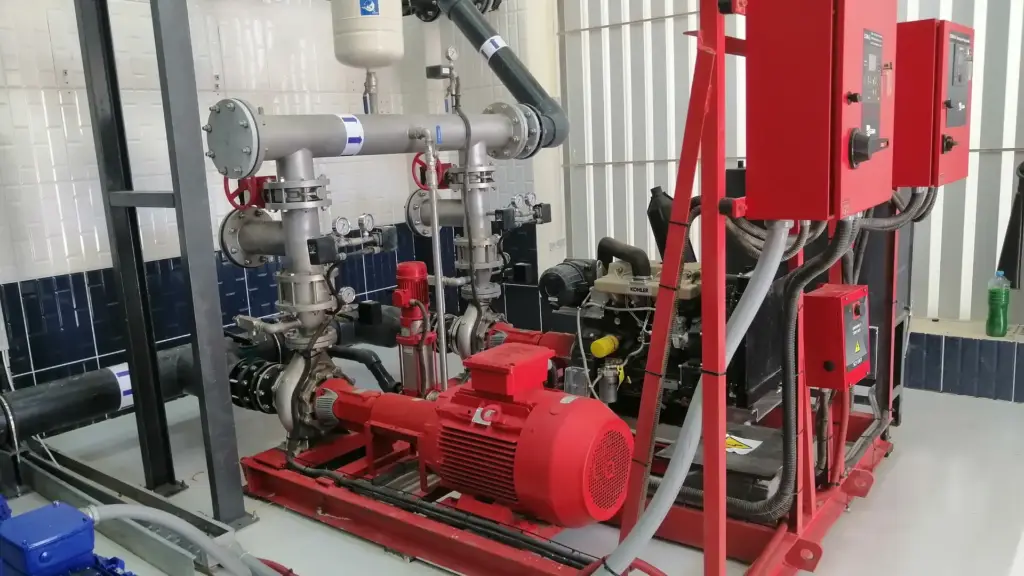
- The valves on the fire pump suction and discharge, on the riser and on each sprinkler zone.
The SESCO tamper switch
We design and make our own tamper switch for OS&Y valves. It fits most OS&Y valves from 2” to 12”, carries two sets of SPDT contacts, so it can signal the fire alarm panel and a second device at the same time, and its adjustable base lets it be set up for a clean signal on any valve.
Good practice
- Keep every control valve open and supervised, and lock any valve that is not supervised.
- When a valve has to be closed for work, tell whoever monitors the panel, and open it again as soon as the work is done.
- Test every tamper switch at least twice a year, as NFPA 25 requires, by partly closing the valve and checking that the panel receives the signal.
Our maintenance team tests valves and tamper switches on every routine visit.